Field Case Study: Fair Oaks, CA
The Anatomy of a Professional Shower Restoration
Why Surface Cleaning Fails When Hidden Sub-Drain Systems Are Clogged
916.600.2009
When a shower suffers from chronic, recurring mold and failing joints, the root cause is almost always hidden beneath the surface. Here is how we diagnosing and completely resolve these deep-set failures.
Phase 1: The Commercial-Grade Detailing Setup
True shower restoration requires specialized mechanical tools and high-performance chemistry. Our tactical arsenal includes stiff stainless steel and targeted nylon detail brushes, heavy-duty industrial alkaline grout cleaners, precision utility knives, and rigid razor scrapers.
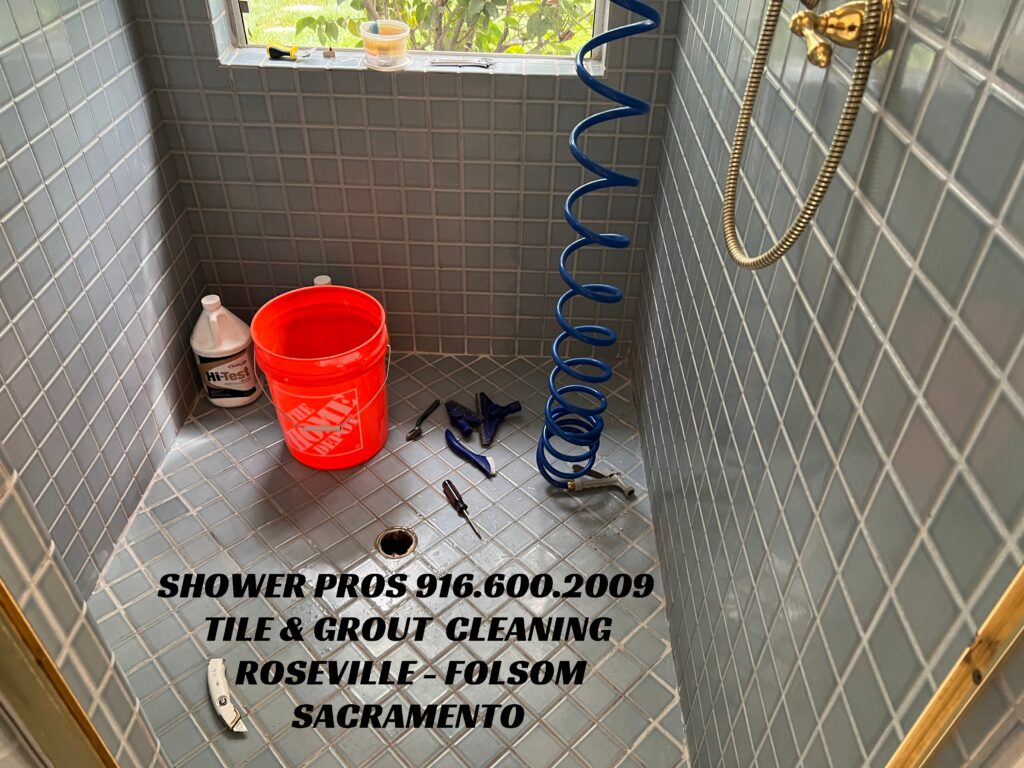
To ensure an absolute flush rinse after intensive chemical scrubbing, we adapt a high-volume washdown hose directly to the shower head supply. This guarantees every trace of emulsified soap scum, body oil, and chemical residue is completely purged down the drain line.
Phase 2: Correcting Defective “Grout-Over-Grout” Repairs
On this project, we had to systematically extract a previous, failed amateur repair. **Rule: Grout will never bond to existing grout.** Smearing a thin cosmetic layer of new cement over old, eroded joints offers zero structural integrity and will flake away in days.
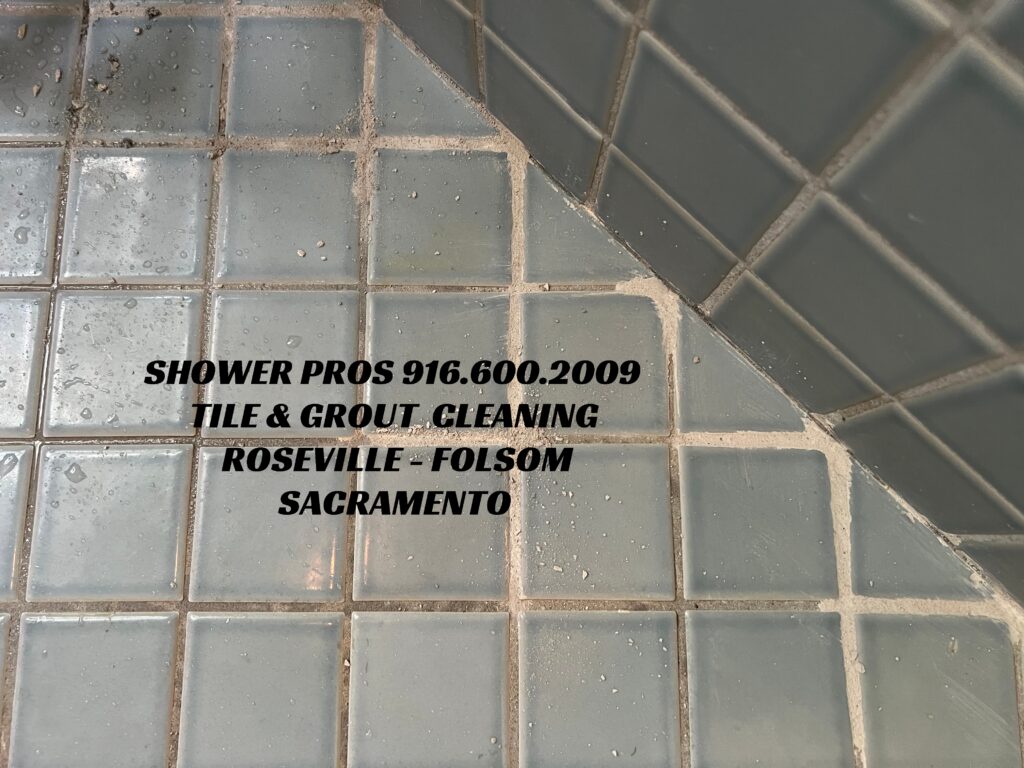
Furthermore, stuffing standard cement grout into change-of-plane corner joints is a guaranteed failure because floors and walls expand and contract at completely different rates. While industry standards suggest flexible silicone caulk for these transitions, even premium silicone will rot and support severe mold colonization if the underlying shower pan remains perpetually waterlogged.
Phase 3: Sub-Surface Drain Machining & Weep Hole Clearing
The real culprit of this shower’s chronic moisture issues was found inside the drain assembly. The existing brass drain cover screws were the wrong thread pitch and completely stripped out inside the collar. To fix this right, we deployed an **8/32″ precision tap bit** lubricated with WD-40 to cleanly re-machine and cut brand-new threads directly into the heavy cast iron drain assembly. This allowed us to secure the drain screen perfectly flush with new, premium stainless steel machine screws.
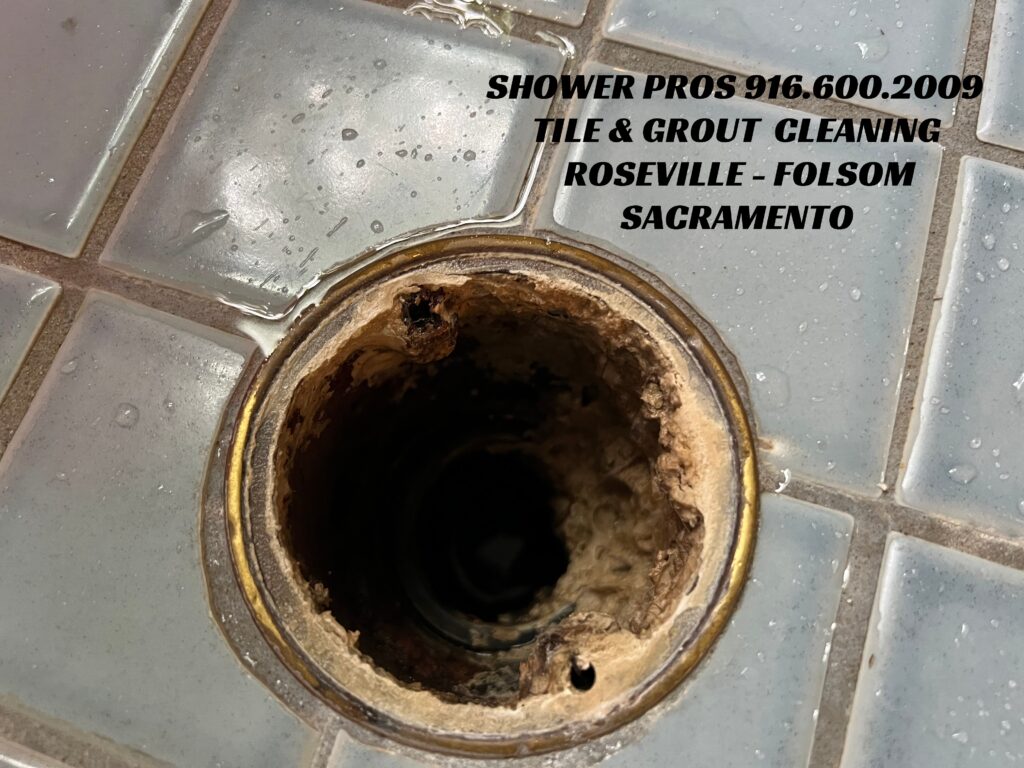
While the drain was open, we performed the most critical step: locating and mechanically clearing out the **three hidden internal sub-drain weep holes** using a specialized 90-degree dental-style pick. When these weep holes plug up with sludge and mineral scale, water that saturates the under-tile mortar bed becomes permanently trapped. Clearing them allows the entire structural substrate to channel water into the drain and dry out completely between uses, eliminating the stagnant moisture source that feeds black mold.
Structural Restoration Completed in Fair Oaks, California
Executed with elite precision by the regional leaders in technical tile and grout forensics.
Note: Some media assets or historical project documentation referenced on this site may contain original markings or metadata from our legacy brand identity, Shower Pros, prior to our transition to GroutRepairPro. All field work, warranties, and structural restoration standards remain identical.
Expert Tile Forensics & Mechanical Restorations By
GroutRepairPro
Roseville • Folsom • Sacramento • California