Case Study: Restoring a 36-Year-Old “Hot Mop” Shower in Sacramento
When a homeowner reached out for a professional shower restoration in the Sacramento area, they were at their wits’ end. Their 36-year-old shower had become impossible to keep in a healthy, sanitary state. They had already tried several different retail cleaners with zero success because the issues weren’t just on the surface—the mold had deeply penetrated the system.
Here is how we used our specialized 6-Step Restoration Process to save this classic shower, eliminate the health hazards, and save the client thousands of dollars compared to a $20,000 full remodel.
The Diagnostic: Anatomy of a 36-Year-Old Shower
Older showers built around a traditional “Hot Mop” waterproofing system operate on a “water-in, water-out” design. Because conventional cement grout is naturally porous, water saturates the tile floor and sits on top of the sub-surface waterproofing membrane.
On this specific job, we diagnosed several critical failure points:
- The 3/16″ Spread Grout Joints: The 4-inch square tiles featured wide 3/16-inch joints. Over four decades, these wide, porous cement joints became a massive breeding ground for deep-seated mold.
- Stained and Failed Silicone: The glass enclosure silicone was completely infested with mold. Once mold embeds itself inside silicone, the material is permanently stained and must be entirely cut out and replaced.
- Clogged Weep Holes: A critical red flag in hot mop systems. Weep holes are located 2 inches down inside the drain assembly. If they get choked with debris, the subsurface water gets trapped. This stagnant water creates a constant vapor drive that forces mold up through the grout lines and destroys the installation from the inside out.
Before Restoration Conditions
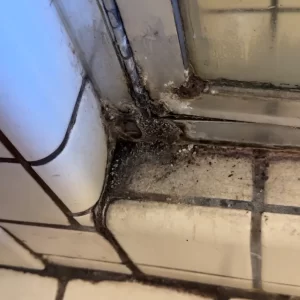
Severe mold and fungus accumulation embedded deep within the track, creating sanitary and health issues.
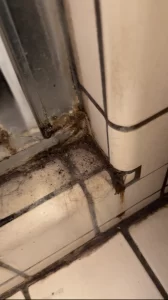
Showing excessive mold growth that completely destroyed the integrity of the silicone perimeter seals, requiring total replacement.
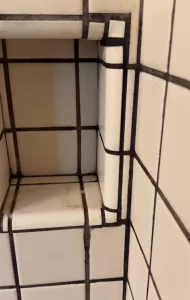
Recessed shampoo niches are notorious for water pooling, leading to failing grout lines and hidden leaks.
Our 6-Step Shower Restoration Process in Action
This project required nearly 8 hours of highly targeted technician labor to properly execute our signature protocol:
1. Advanced Mold Remediation
We applied a commercial-grade remediation product that kills mold spores within 60 seconds. Due to the deep contamination in the 3/16″ spread joints, this required multiple sequential applications to completely neutralize the subsurface growth.
2. Mechanical Grout Preparation
Surface washing isn’t enough. We utilized specialized stainless steel brushes to physically scrub and grind away the top layer of damaged, mold-stained cement grout. This exposed a completely fresh, stable layer of clean grout underneath without risking rust stains from inferior metal tools.
3. Glass Enclosure Restructuring
All old, mold-compromised silicone around the glass enclosure and tile transitions was mechanically removed. We thoroughly sanitized the tracks and prepped the channels for re-sealing.
4. Drain & Weep Hole Clearing
We strip out the drain cover and excavated accumulated debris exactly 2 inches below the shower floor level. Clearing these vital weep holes instantly restored the “water-in, water-out” functionality, ensuring the pan can drain completely and dry out between uses.
5. High-Performance Grout Repair & Shower Restoration
For all structural grout repairs, we don’t use standard cement base. We packed the joints with 100% epoxy grout. 100% epoxy is completely waterproof, chemically resistant, and structurally far superior to cement.
6. 100% Silicone Perimeter Seal
We seal all movement joints and glass transitions using premium 100% silicone. This provides a highly flexible, completely watertight seal that won’t shrink or break down like cheap acrylic caulks.
Completed Restoration Results
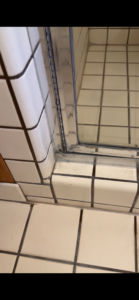
leaky glass enclosure with faulty silicone was allowing water to get outside shower
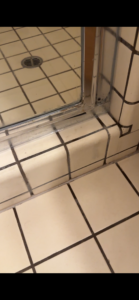
100% clear silicone applied to entire glass enclosure resulting with waterproof protection
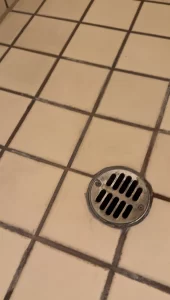
drain grate was removed, the 3 weep holes cleaned and drain section cleaned removing soap scum, hair and calcium deposits
The Hard Truth About Grout Sealers & Mold
There is a massive misconception among homeowners that grout sealers make grout waterproof or mold-proof. This is completely false.
By design, grout needs to “breathe” to allow vapor and subsurface moisture to escape. Penetrating sealers are engineered specifically to allow this breathability process to happen, meaning it is physically impossible for a sealer to make cement grout waterproof.
Furthermore, epoxy grout is not immune to mold—and the reality is, nothing is. If organic matter like soap scum and skin cells sits on a surface with moisture, mold will grow on it, whether it’s plastic, tile, cement, or epoxy.
Cure Time & Return to Service: The shower was fully prepped, executed, and delivered in under 8 hours. The shower was cleared for full use exactly 24 hours later to allow the advanced 100% epoxy grout and 100% silicone to fully cure and achieve maximum strength.
Pro Tips for Maintaining an Older Shower
At the final walkthrough, we always leave our Sacramento area clients with a clear roadmap to keep their restored shower looking pristine without spending hours scrubbing:
- The 5-Minute Maintenance Rule: The absolute key to protecting your professional shower restoration and stopping mold from returning is to maintain and clean your shower every two weeks. You don’t need heavy chemicals or intense scrubbing. All it takes is a purpose-made grout cleaner that is safe on grout, a small nylon grout brush, and 5 minutes of your time.
- The Ultimate Key: Dry It Out: The single most effective thing you can do is get that shower to dry out completely before the next use. Just a reality—mold cannot survive without moisture. Tips like running an exhaust fan longer or utilizing a quick squeegee after the final shower of the day dramatically cuts down the humidity levels that spores need to activate.
- Understand Stained Silicone: If you see black mold spots creeping behind or inside your silicone, surface sprays won’t fix it. The silicone is permanently damaged and requires professional replacement.
For a deeper dive into the specific products we recommend, step-by-step instructions on how to use them, and how to check your tile for invisible soap scum to make sure you are cleaning thoroughly, check out our dedicated FAQ Section.