
A homeowner in Elk Grove contacted Grout Repair Pro because their 26-year-old tub/shower had developed moldy silicone caulk, heavy hard water buildup on the glass, stained grout, and years of surface wear. They wanted to restore the existing shower rather than replace the tile if the underlying installation was still in good condition.
Project Overview
- Location: Elk Grove, CA
- Project Type: Shower Restoration / Grout Repair / Caulk Replacement
- Age of Shower: 26 years
- Issues Addressed: Moldy silicone caulk, localized grout deterioration, hard water mineral deposits, and tub surface staining
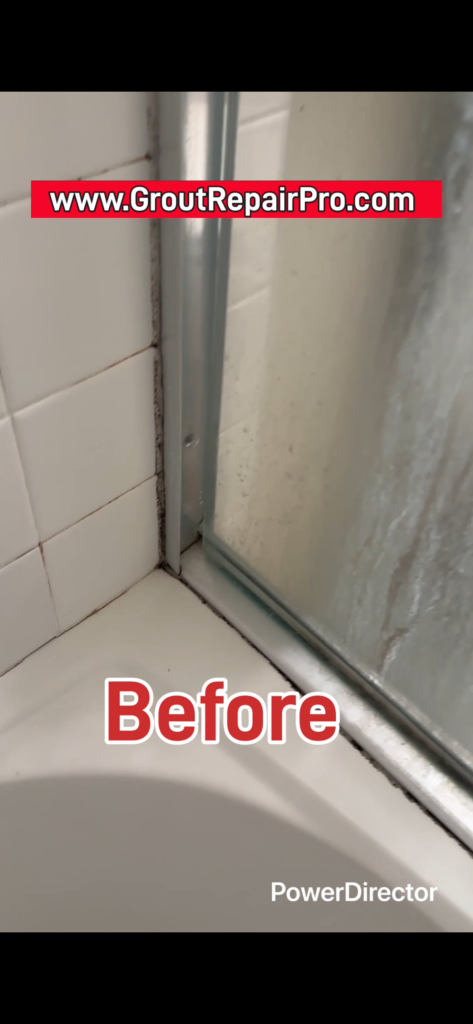
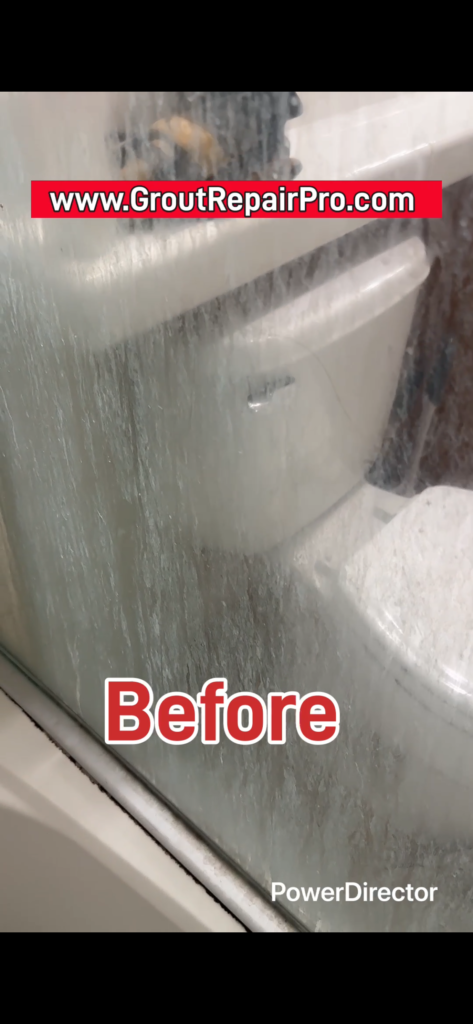
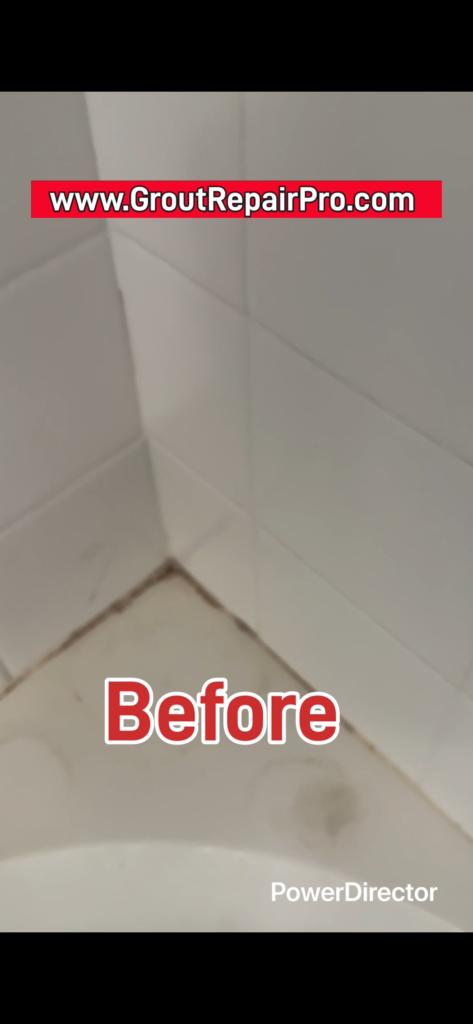
During the evaluation, I found that the shower was a good candidate for restoration. The tile installation was still functional, but several areas showed signs of aging and required targeted repairs.
Issues Identified During the Initial Evaluation
This 26-year-old tub/shower had several issues that developed over decades of daily use. While mold growth, grout wear, and mineral buildup are common in older showers, this installation had several specific areas that required attention.
Mold Growth at the Tub-to-Tile Transition
The primary concern was mold accumulation along the lower tub-to-tile joint. The original silicone caulk had aged and was no longer providing a clean, maintainable surface in an area exposed to frequent moisture.
Calcium Deposits on Shower Glass
The glass enclosure had significant mineral buildup from years of hard water exposure. The lower sections of the glass showed the heaviest deposits where water remained after shower use.
Long-Term Product Staining on the Tub Surface
One unique issue with this shower was the staining left behind from years of shampoo and personal care products sitting on the tub ledge. Over time, repeated exposure to these products created stubborn discoloration that could not be removed through normal cleaning.
Localized Grout Wear Around the Soap Dish
The grout damage was not throughout the entire shower. The most noticeable deterioration was around the soap dish and corner areas where moisture exposure and movement commonly affect grout joints.
How We Restored This Shower
Restoring this tub/shower required a combination of deep cleaning, surface restoration, targeted repairs, and new sealant work. Because the shower structure was still sound, the goal was to restore the existing installation rather than replace the tile.
Glass Restoration and Mineral Deposit Removal
Because mineral deposits can bond tightly to glass surfaces over time, this process required more than standard household cleaning methods.
Shower Door Track Cleaning and Mold Removal
The bottom door tracks were removed to access areas that are normally difficult to clean. This allowed us to remove trapped moisture, buildup, and mold from beneath the tracks before restoring and resealing the area.
Grout Repair and Tile Restoration
The deteriorated grout areas around the soap dish and corners were repaired. An epoxy grout was used in the soap dish area to provide a durable, stain-resistant repair in a high-use location.
Silicone Caulk Replacement
The failed silicone at the tub-to-tile transition was removed and replaced with new 100% silicone to create a clean, finished joint.
The Results
After restoration, the tub/shower was transformed from a difficult-to-maintain 26-year-old enclosure into a clean, refreshed, and functional space. The failed silicone was replaced, mineral buildup was removed from the glass, damaged grout areas were repaired, and the shower was restored without the cost and disruption of tile replacement.



The homeowner was pleased with the improvement and was provided with the Grout Repair Pro Maintenance Guide to help care for the restored shower and reduce future mold and mineral buildup.
Shower Maintenance Recommendations
To help extend the life of this restoration, the homeowner was provided recommendations for drying the shower, maintaining silicone joints, and reducing mineral buildup on the glass.
Frequently Asked Questions
Can an old tile shower be restored instead of replaced?
Many older showers do not need complete replacement. If the tile installation is still structurally sound, restoration can often address failing caulk, grout deterioration, staining, and surface buildup while preserving the existing tile.
Can moldy shower caulk be cleaned or does it need to be replaced?
In many cases, once silicone caulk has developed deep mold discoloration, cleaning products will only provide a temporary improvement. If mold has penetrated the silicone or the caulk has separated from the surface, replacement is usually the better long-term solution.
Can hard water stains be removed from shower glass?
Heavy calcium deposits often cannot be removed with normal household cleaners. The method required depends on the severity of the buildup and the condition of the glass.
Grout Repair Pro provides shower restoration, grout repair, and silicone replacement services throughout Elk Grove and the surrounding Greater Sacramento Valley area.
Need Help With Your Shower?
If your shower has similar problems with grout, caulk, hard water buildup, or staining, contact Grout Repair Pro to schedule an evaluation at 916.600.2009