Hot Mop vs. Sheet Membranes: The Ultimate Shower Waterproofing Breakdown
When you are building or remodeling a high-end custom shower, the most critical design decision happens long before the first piece of porcelain or natural stone is laid. It’s all about how you waterproof the pan. Get this foundation wrong, and water will silently destroy your wood subfloor, rot your framing studs, compromise structural joists, and create a massive mold issue hidden right beneath your feet. Shower floor failures are among the most expensive residential construction defects to remediate, often requiring complete down-to-the-studs tear-outs.
If you live in the Sacramento Valley, chances are incredibly high that your current shower relies on a hot mop pan. From the massive structural building booms of the 1950s through the mid-1990s, hot mopping was virtually the only approved, code-compliant choice for regional homebuilders in areas like Roseville, Folsom, Citrus Heights, and older suburban developments. If your home was built or remodeled during that era, you are living on top of a traditional asphalt sub-pan system right now.
Two major methods dominate the professional tile installation and remodeling market today: traditional Hot Mop Shower Pans and modern Topical Sheet Membranes (such as the Schluter-Kerdi system). Both have passionate defenders among old-school installers and modern building scientists. However, as a professional with over 30 years of hands-on experience in structural shower builds and precision stone restoration across the Sacramento region, I know that the right choice depends entirely on structural preparation, execution, and long-term maintenance requirements. Let’s look at the cold, hard facts behind both waterproofing systems.
Option 1: Traditional Hot Mop Shower Pans
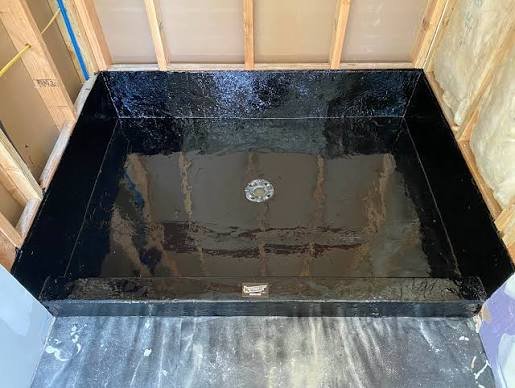
Hot mopping is a classic California tile installation tradition, widely used across the West Coast but rare in other parts of the country. The process involves laying down thick tar paper (felt paper) over the subfloor, installing wire mesh or metal lath along the floor and up the walls to a height of at least three inches above the finished dam, and then skillfully applying multiple alternating layers of molten, hot Type 3 asphalt built up with layers of fiberglass sheeting. The result is a heavy-duty, multi-ply, monolithic barrier applied directly over a sloped base.
- The Advantage: It is incredibly tough, rigid, and forgiving of minor subfloor imperfections. Because the asphalt is applied as a hot liquid at temperatures exceeding 400 degrees Fahrenheit, it flows smoothly into every corner, fills voids, wraps perfectly over the curb, and creates a completely seamless, self-sealing membrane. When properly buried under a dense mortar bed, a hot mop pan can withstand immense physical wear and last for decades without degrading.
- The Hidden Catch (The Saturated Mud Bed): Hot mop is explicitly classified as a sub-pan waterproofing system. This means your thick cement mortar bed (deck mud) sits on top of the waterproof asphalt layer. Every time you take a shower, water saturates your grout joints, passes entirely through your porous mortar bed, hits the sloped tar liner, and slowly migrates downward to the base of the drain. Consequently, the concrete mud bed beneath your tile remains perpetually damp, functioning as a constant moisture reservoir.
The Anatomy of a “Water-In, Water-Out” System
To understand why traditional builds fail, you must understand how they are engineered to handle water. A traditional shower floor is designed from the ground up to operate as a “water-in, water-out” system. It does not try to stop water at the tile layer; instead, it manages the water that inevitably gets past the tile. When constructed properly according to industry standards, an initial sloped mortar layer (known as the pre-slope) is packed over the wood or concrete subfloor, dropping a mandatory one-quarter inch per linear foot toward the drain. The hot mop liner is then applied directly over this pre-slope. Finally, a secondary thick layer of concrete deck mud (the top slope) is packed over the liner, providing the final surface for tile bonding.
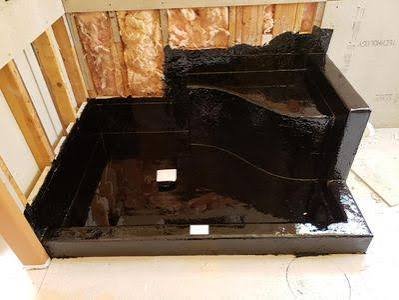
Water will penetrate your wall grout, floor grout, and thin-set mortar. With regular daily use, that subsurface water runs down the vertical waterproofing layer, saturates the horizontal deck mud, and gravity draws it downward toward the collection point. Because this water is migrating entirely below your finished tile line, it cannot enter the top opening of your visible drain grate. To bridge this gap, a specialized three-piece clamping ring drain is required to connect the sub-surface plumbing to the waterproofing liner.
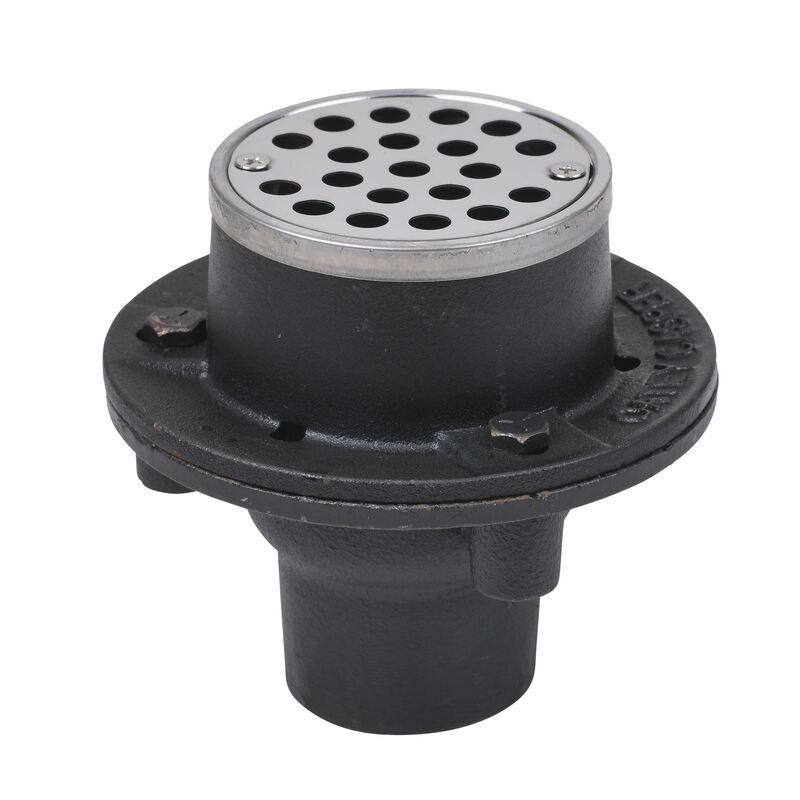
A clamping drain works by mechanically sandwiching the hot mop liner between an upper clamping collar and a lower drain flange, secured tightly with bolts. Integrated directly into that upper flange collar are small weep channels that lead to tiny, internal weep holes. These weep holes represent the only exit strategy for the water trapped inside your concrete mud bed. Every time you shower, new water flushes through the tile, pushing the old, sub-surface water out through those channels and safely down into the waste plumbing.
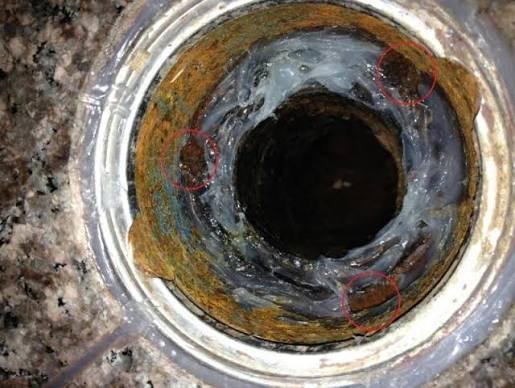
⚠️ The Clogged Weep Hole Disaster: This is the single biggest point of failure in traditional hot mop builds. If the original installer failed to place a protective layer of pea gravel or a dedicated weep-hole protector around the drain base before packing the deck mud, the raw concrete mix blocks the holes immediately. Over years of use, soap scum, hair, body oils, skin cells, and hard water lime scale pack into those channels, choking them off completely. Once blocked, the sub-surface water has nowhere to go. It sits stagnant inside the concrete mud bed, turning your shower floor into a hidden underground swamp that breeds deep bacteria, erodes tile thin-set, and emits a foul, sour, musty mold smell that you can never seem to scrub away from the surface.
Option 2: Modern Topical Sheet Membranes
Topical sheet membranes represent the modern building science evolution of tile installation. Instead of burying the critical waterproofing layer at the very bottom under inches of heavy concrete mud, a pliable, thin, engineered waterproof fabric sheet membrane—typically made of polyethylene with fleece webbing laminated to both sides—is adhered directly to the surface of a single, cured mortar bed or a pre-fabricated high-density foam tray. This installation utilizes highly specialized thin-set mortar to form a solid bond.
- The Advantage: This is a true topical waterproofing system. Water never touches your underlying mortar bed or structural sub-floor. The moment moisture passes through your tile joints or grout lines, it hits the sheet membrane and is immediately directed straight down into a integrated bonded flange drain. Because the entire assembly dries out completely between uses, the structural risk of deep-seated saturation, blocked weep holes, efflorescence (white mineral crusts), and musty odors is completely eliminated. It creates a far more sanitary environment.
- The Hidden Catch: It demands absolute installation perfection. Unlike a hot mop system which self-levels and fills its own structural voids, sheet membranes require meticulous, high-precision craftsmanship. The tile installer must tightly wrap corners, ensure perfect seam coverage with exact two-inch overlaps, and use the correct modified or unmodified thin-set mortars according to strict manufacturer specifications to guarantee a 100% waterproof bond. If an inexperienced installer leaves a single air void, creates a pinhole, or fails a corner fold, the entire system can compromise and leak immediately upon use.
Deep Technical Analysis: Crucial Differences Every Homeowner Must Know
To fully evaluate these two technologies for a long-term investment, we must look past the marketing and examine how they perform under real-world structural stresses over time. Both systems have vastly different impacts on your home’s framing and overall performance.
1. Structural Weight and Ceiling Sag: A traditional hot mop build requires a pre-slope mortar bed, the asphalt membrane itself, and a thick secondary mortar bed. This assembly can easily total 2 to 3 inches of solid concrete, translating to roughly 25 to 30 pounds of dead weight per square foot. On a ground-floor concrete slab, this weight is negligible. However, on a second-story bathroom remodel or an older home with undersized joists, this massive load can cause subfloor deflection, leading to ceiling sag below and cracked grout lines above. Topical sheet membranes can be installed over much thinner beds or lightweight foam trays, minimizing dead weight.
2. Structural Movement and Shear Stresses: Wood framed homes constantly expand, contract, and shift with seasonal humidity and temperature changes—especially in the Sacramento region, where we swing from damp winters to scorching summers. A hot mop system handles movement through sheer mass; the thick mud bed floats independently over the tar paper layer. A topical sheet membrane relies on engineering. The flexible polyethylene sheet acts as an uncoupling layer, absorbing lateral movement and shear stresses so that structural shifting doesn’t transfer directly into your brittle tile or stone surface, preventing cracked tiles.
3. The Mandatory 24-Hour Flood Test: Regardless of which system you choose, the plumbing code mandates a 24-hour flood test before any tile can be installed. This involves plugging the drain assembly and filling the shower pan with water up to the top of the curb, letting it sit to verify structural integrity. Testing a hot mop pan is straightforward because the asphalt is thick and tough. Testing a sheet membrane requires careful inspection of every single seam. If a leak occurs, tracing the path of water under a sheet membrane can be highly difficult, whereas a hot mop failure usually points directly to an unsealed plumbing connection or a framing puncture.
Side-by-Side: The Structural Comparison
| Feature | Traditional Hot Mop | Modern Sheet Membrane |
| Waterproofing Level | Sub-pan (Concrete sits on top of the waterproof layer). | Topical (Protects the concrete bed completely). |
| Mold / Odor Risk | High if weep holes clog. Stagnant water creates trapped mold smells. | Extremely Low. No thick mud bed to trap standing water. |
| Installation Risk | Thick and forgiving, but emits heavy, foul asphalt fumes. | Requires absolute precision, crisp folds, and zero voids. |
| Weight/Build | Adds significant weight and thickness to the floor structure. | Lightweight, engineered fabric system. |
| Drying Time | Slow. The mud bed remains saturated long after use. | Rapid. Surface water drains and evaporates quickly. |
| Subfloor Suitability | Excellent for concrete slabs; heavy for wood joists. | Ideal for all subfloors, including upper stories. |
The Professional Verdict
Hot mop has stood the test of time and remains a robust option for heavy-duty, ground-floor residential construction where structural mass isn’t an issue. However, it belongs to an older era of building engineering when thick, saturated mud beds were the only option available. Modern topical sheet membranes offer a cleaner, faster-drying, lighter, and far more sanitary shower environment—if and only if they are installed by a certified tile professional who respects the strict manufacturing tolerances and installation guidelines required for a perfect bond.
Building a new shower or fixing a musty, failing pan? Don’t guess on your structural waterproofing system or live with trapped mold odors that ruin your indoor air quality. At Grout Repair Pro, we bring over 30 years of hands-on structural tile and restoration experience to every single residential project. In fact, Step 5 of our signature 6-Step Shower Restoration Process is dedicated entirely to deep internal drain clearing, mechanical weep hole clearing, and targeted flush testing to ensure your traditional system breathes and drains exactly the way it was engineered to from the factory.
Whether your custom bathroom project demands a traditional multi-layer hot mop restoration or a modern engineered topical fabric membrane system, we make sure your installation is built like an absolute fortress against water damage. Contact Grout Repair Pro today to discuss your specific shower project and schedule your professional onsite consultation!